AI can generate.
It cannot remember.
Every SLUNZY song begins somewhere machines cannot go: lived experience.
What happens when human experience meets artificial possibility?
What happens when a human being brings the memories, the words, the contradictions, the humour, the scars and the dreams — and lets artificial intelligence find the sound?
Is the result less human? Or can technology sometimes help us express something we could never have created alone?
SLUNZY does not hide the machine. It does not pretend that an instrument was played when it was not. The question is more interesting than that: what does authenticity mean when the tools change?

Different roads.
Same sun.
Some stories begin with a person. Others with a road, a coastline, a morning or a place that refuses to disappear from memory.
Technology can recreate a sound.
It cannot have been there.

Music has always moved with its machines.
Machines kept rhythm. Electronics created sounds no acoustic instrument could make. Tape and multitrack multiplied performances. Sampling turned recordings into material. Software changed editing and pitch. AI moves the line again.

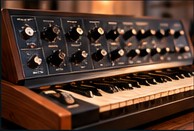
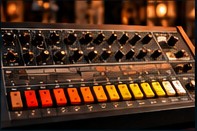



AI didn't create the question. It simply moved the line again.
DESIRE. DOUBT. FREEDOM. HUMOUR. A LIFE.
AI has access to extraordinary possibilities. But it wasn't there.
It didn't live that summer. It didn't lose that person. It didn't drive that road. It didn't fall in love. It doesn't know why a particular morning still matters twenty years later.
That part remains human.
Not a disguise.
Not an apology.
Not a virtual pop star.
Not a musician pretending AI isn't there.
And not an AI pretending to be human.
SLUNZY is the space between the two.
Human thoughts. Artificial possibilities. Music somewhere in between.
Genre is a tool.
The story is the reason.

Some stories need a piano.

Some need noise, dirt and distortion.
Others need almost nothing.